
Why One Production Partner Beats Juggling Four Vendors
A single event can pull in a video crew, an AV company, a live-stream team, and a marketing agency who have never met. Here is the hidden cost of that arrangement, and what changes when it all lives under one roof.
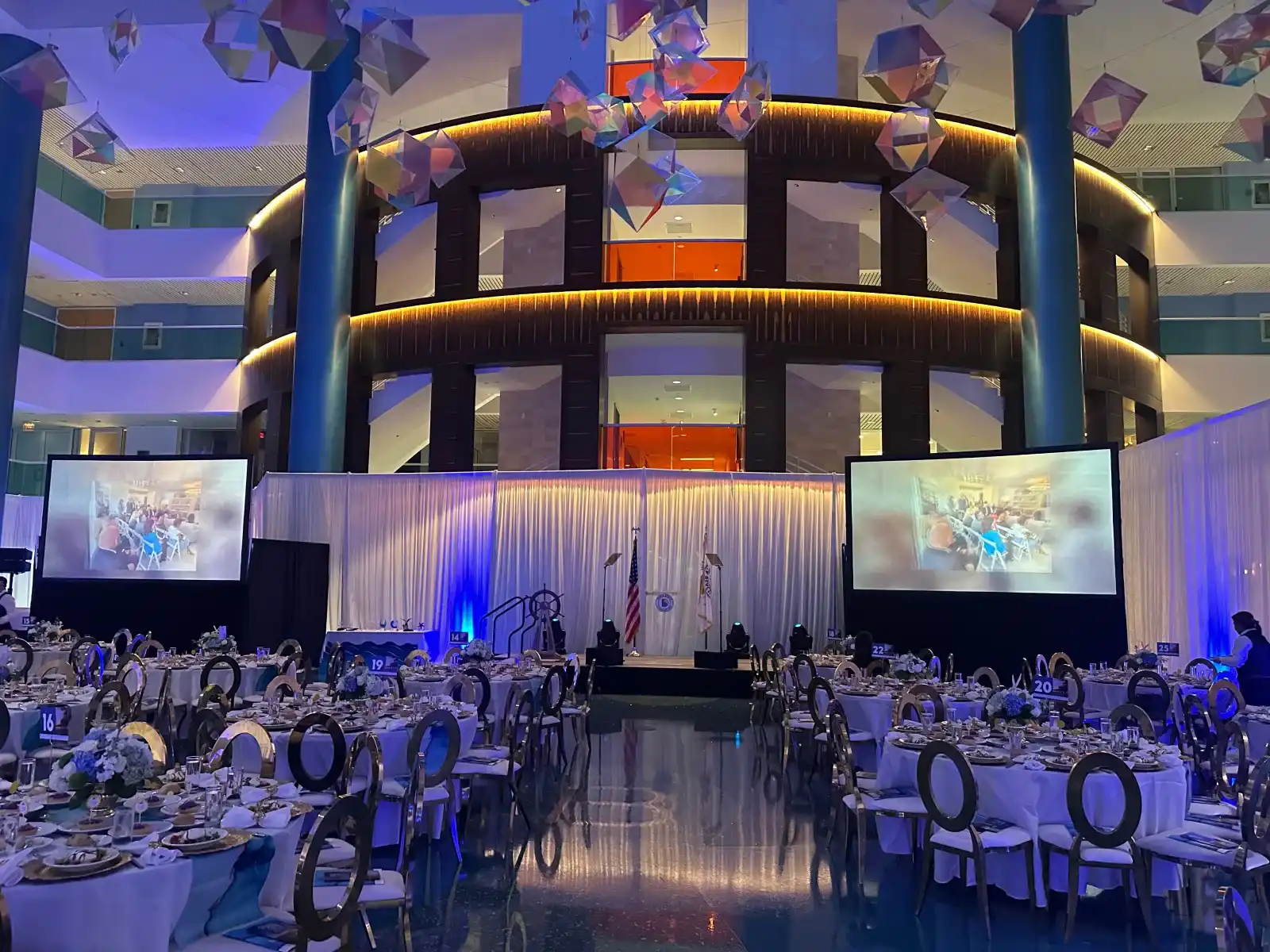 Cover Image
The week before a typical corporate event, there's a video company shooting the keynote, a separate AV vendor handling the room, a live-stream team flown in for the broadcast, and a marketing agency waiting to cut the recap afterward. Four contracts, four points of contact, four invoices that don't reference each other. On paper, you hired the best specialist for every job. In practice, you just became the project manager for four companies that have never worked together and have no reason to make each other look good.
That arrangement feels normal because it's common. It's also the quietest, most expensive tax on a marketing and events budget, and almost nobody puts it on a line item.
The Hidden Tax of Coordination
When you split a single production across multiple vendors, you don't just pay their fees. You pay for the gaps between them. Every handoff is a meeting. Every assumption is a risk. The AV team assumes the video crew is bringing the audio feed. The video crew assumes the live-stream team has the redundant internet. The agency assumes someone captured cinema-quality footage when the cameras were set for a room projection. Nobody's lying. Everybody's technically doing their job. The failures live in the spaces no single contract covers.
And the person standing in that gap is you: the translator between teams that speak slightly different languages, the scheduler chasing four calendars, the only one who sees the whole picture. That's real labor, and it falls on the stakeholder who can least afford it on event day.
Where the Seams Show
The cracks in a multi-vendor setup are predictable. After enough events you can almost set your watch by them:
- The blame triangle. When something goes wrong, every vendor has a plausible reason it was someone else's responsibility. You get three explanations and zero fixes, because no one owns the seam where the failure happened.
- The quality mismatch. Your premium video looks incredible, but the AV vendor tuned the audio for the room, not the recording. The final cut is only as strong as the weakest vendor in the chain.
- The timeline tax. Footage sits for days while it moves from the crew that shot it to the team that edits it to the agency that distributes it. By the time the recap goes out, the moment has cooled.
- The brand drift. Four vendors interpret your brand four ways. The stage graphics, the lower thirds, the social cuts, and the paid ads all look like cousins instead of siblings.
What One Roof Actually Means
What is a full-service production partner? A full-service, or one-roof, production partner handles video, event production, AV, and digital marketing with a single accountable team rather than coordinating separate specialist vendors. One project lead owns the outcome from the first planning call to the final deliverable, so the handoffs that break multi-vendor productions never exist.
Consolidating means more than bundling line items to chase a discount: it puts one accountable team in charge of the whole journey, from the first planning call to the last piece of content out the door. When video, event production, AV, and digital marketing all answer to the same project lead, the seams disappear because they were never separate contracts to begin with.
The simplest test of whether you're truly under one roof: when something goes sideways at 6pm on show day, is there one phone number that owns the answer? If you have to decide which of four vendors to call first, you're still carrying the coordination yourself.
Specialists win the task. One accountable team wins the outcome. The difference shows up in the spaces between the contracts, exactly where multi-vendor productions quietly fall apart.
What Changes When It All Lives Under One Roof
When the whole production answers to one team, three things change inside the first project. The audio is captured for the deliverable, not just the room. The recap ships in hours instead of weeks, because the crew that shot it and the team that edits it share one workflow. And the brand stays consistent from the stage screen to the paid ad, because one creative standard runs through every asset instead of four interpretations of a brand guide.
You also get something harder to measure but easy to feel: a quiet event day. The most reliable sign of a well-run production is a client who gets to actually attend their own event instead of running it.
The Trust Question
For most corporate buyers, the real hesitation about consolidating isn't price. It's trust. Handing one partner the whole production feels riskier than spreading it across specialists, right up until the first multi-vendor event goes wrong and no one will own it. The truth is the opposite of how it feels: a single accountable partner puts exactly one team's reputation on the line for the whole outcome. That's not a bigger bet. It's a clearer one.
To de-risk it, ask for evidence: the work, the references, and the war stories of what happened when something went wrong. The test of a partner isn't the events that went perfectly. It's what they did the day one didn't.
Where to Start
You don't have to consolidate everything at once. Look at your next event or campaign and count the handoffs, since every place one vendor passes work to another is a seam you currently manage yourself. Hand the two most tightly linked pieces to one team first, watch the timeline and quality, and let the results make the case for the rest.
When the whole production lives under one roof, you stop being the project manager for four companies and go back to the one thing you were supposed to be all along: the client.
Last updated