
What It Takes to Produce a Standout Live Event in South Florida
A live event is a hundred small decisions that the audience never sees and instantly feels. Here is what actually separates a South Florida event that lands from one that just happens, and why staging, audio, video, and live streaming should answer to one team.
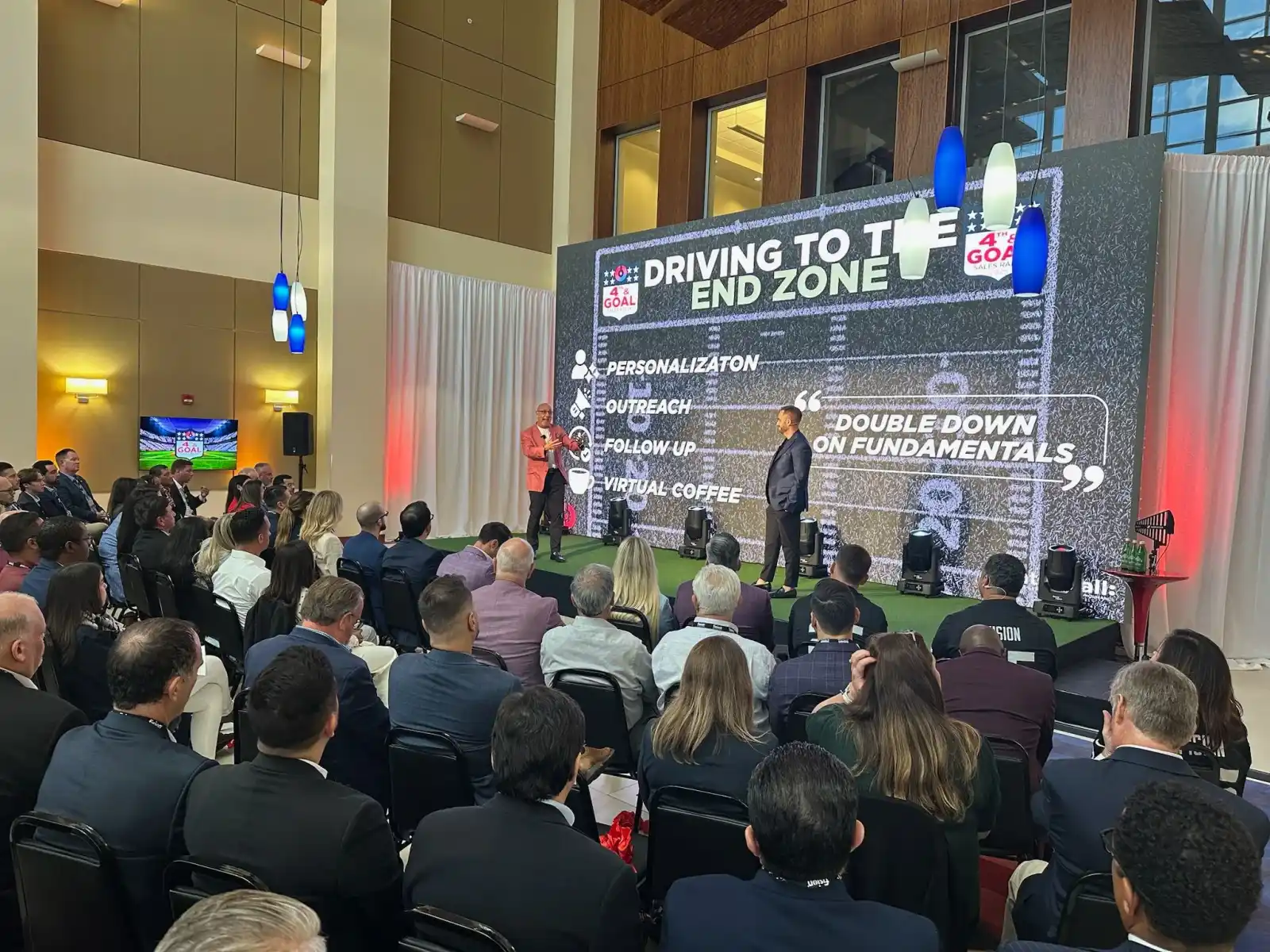 Cover Image
There's a moment at every live event when the lights come up, the first speaker steps to the mark, and a few hundred people decide in about ten seconds whether they're in good hands. They don't analyze the staging or the sound system. They just feel it. A clean stage, a voice that carries without strain, and a screen that reads from the back row tell the room that someone competent is in charge before a single word lands. A muddy mic or a stage that looks improvised tells them the opposite just as fast.
Producing that first impression on purpose, again and again, across a ballroom in Fort Lauderdale, a venue in Miami, or a corporate campus in Palm Beach, is a craft. Here's what it actually takes.
Staging Sets the Tone Before Anyone Speaks
Staging is what the audience reads first and remembers longest. The stage frames everything else: the height of the platform, the sight lines from the back, the way lighting shapes a face instead of flattening it, and screens large enough to read but never large enough to swallow the speaker. Get it right and the room feels intentional. Get it wrong and every other element fights uphill all night.
In South Florida, staging also has to respect the venue. A waterfront space in Miami-Dade, a hotel ballroom in Broward, and an outdoor setup in Palm Beach each carry their own ceiling heights, power access, load-in paths, and weather realities. A standout stage isn't the most expensive one; it's the one designed for the room it's actually standing in.
Audio Is the One Thing You Cannot Fake
Audio is the element most likely to sink an otherwise great event, and the one guests are least forgiving about. People will sit through an imperfect slide. They won't sit through a keynote they can't hear. Clean audio means the right microphones for the room, a mix that holds up whether the speaker whispers or shouts, monitors so presenters can hear themselves, and enough redundancy that a single failed lapel doesn't stop the show.
South Florida rooms make this harder than it looks. Hard surfaces, glass walls, open-air venues, and HVAC noise all work against intelligibility. Tuning the system to the actual space, not a spec sheet, is the difference between a voice that fills the room and one that bounces around it. This is the quiet engineering behind professional event production, and it's where experience earns its keep.
Video Is How the Event Outlives the Day
Live video does two jobs that pull in different directions. In the room, it puts the speaker on the big screens so the back rows feel as close as the front. Beyond the room, it captures the recap reel, the sizzle video, the social clips, and the proof you show next year's audience. A camera positioned for the room projection is rarely positioned for the broadcast, and a crew that plans for only one will quietly cost you the other.
That's why standout events plan the video for the deliverable from the start, not as an afterthought once the cameras are already set. The footage you walk away with should be ready to become content the same week, while the event is still warm in everyone's mind.
Live Streaming Doubles Your Audience
Plenty of your audience isn't in the room, and increasingly they expect not to have to be. A reliable stream turns a single-room event into something a remote team, a national audience, or a board member stuck at the airport can attend in real time. But a stream is only as strong as its weakest link, and the weak link is almost always the connection.
Doing it right means more than pointing a camera at a website. A dependable broadcast needs the right encoder settings, a clean audio feed pulled straight from the board rather than a camera mic, graphics and lower thirds that match the brand, and redundant internet so one dropped connection doesn't end the broadcast. When live streaming is built into the production from the beginning, the online audience gets the same event as the room, not a grainy afterthought.
The Difference Is One Team, Not Four
Here's what most live events get wrong: each of these pieces gets handed to a separate vendor who shows up on the day having never spoken to the others. The staging company, the audio team, the video crew, and the stream operator all do their own jobs well and assume someone else owns the handoffs between them. Those handoffs are exactly where events fall apart.
When one team owns the whole production, those failure points never get created. Consider what that looks like in practice:
- The audio feeds everything. The same clean signal runs to the room, the recording, and the stream, so nothing is captured for one purpose and ruined for another.
- The cameras serve double duty. Footage is framed for the screens and the final content at the same time, instead of forcing a compromise on show day.
- The brand stays consistent. Stage graphics, on-screen lower thirds, and the stream overlay all come from one creative standard rather than three interpretations of it.
- There's one number to call. When something needs a decision at 6pm on show day, one team owns the answer instead of pointing at each other.
Why Local Experience Matters in South Florida
Producing in Broward, Miami-Dade, and Palm Beach is its own skill set. A team that works these counties regularly knows the venues, the load-in quirks, the parking and union rules, the way an afternoon storm can reshape an outdoor plan, and which local crews and gear to trust when a timeline tightens. That knowledge doesn't show up on an invoice, but you feel it in every event that runs on time and every problem solved before you ever hear about it.
Full Moon Creative has produced live events across South Florida for 21+ years, and we keep staging, audio, video, live streaming, and AV together in-house on purpose. One team, one plan, one accountable point of contact from the first call to the last clip out the door.
Where to Start
The cleanest way to plan a standout event is to start at the end. Decide what the day needs to accomplish and leave behind, whether that's a recap reel, social clips, a recorded session for people who couldn't attend, or simply a flawless room, then let those goals drive the staging, audio, cameras, and stream as one connected plan rather than four disconnected bookings.
Do that, and the event stops being a logistics problem to manage and becomes what it was always supposed to be: a room full of people who feel, in the first ten seconds, that they're in good hands.
Last updated