
How to Build Multi-Channel Campaigns That Reinforce Each Other
Most brands run paid, organic, and social as separate programs reporting to separate dashboards. Here is how integrated campaigns compound instead of cancel each other out.
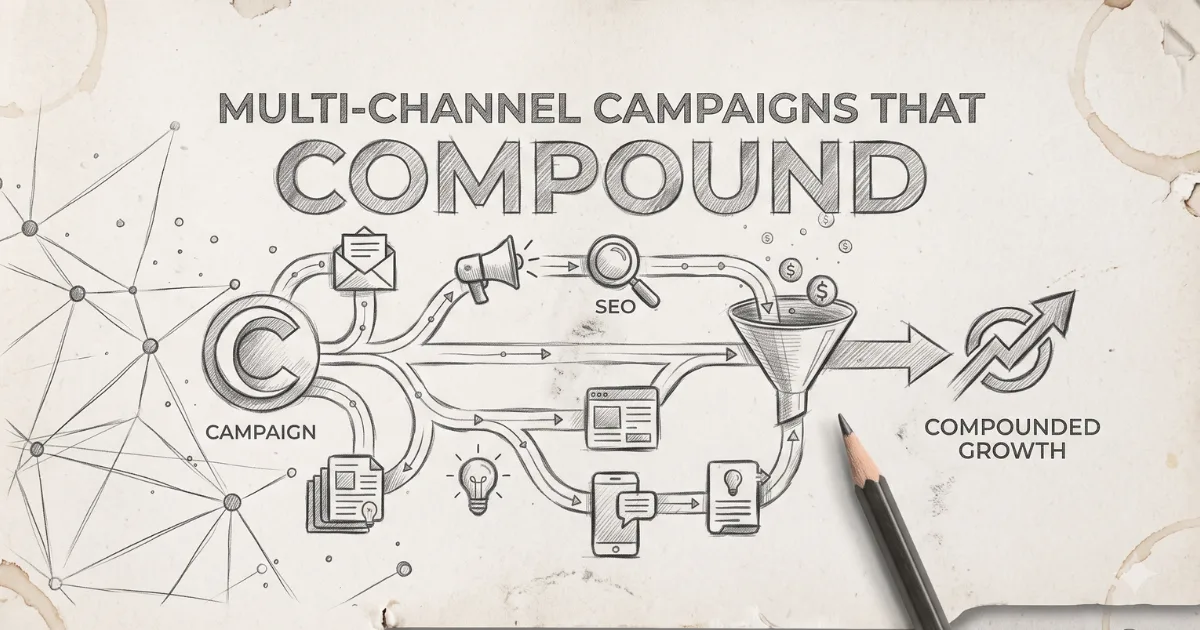 Cover Image
In nine marketing departments out of ten, the same thing happens. The SEO team owns one dashboard. Paid media owns another. Social owns a third. The agency reports in a fourth. Each channel runs its own playbook, chases its own metrics, and quietly competes for the same budget. The brand pays for all of it, and the channels barely talk.
That's the silo problem, and it wastes more marketing money than almost anything else. Channels that should feed each other run in parallel instead, so they never compound.
The damage is easy to miss, because every channel looks fine on its own. Paid hits its cost-per-click target. SEO grows organic sessions each quarter. Social posts on schedule and watches followers tick up. Every report shows progress. What no report shows is the friction between them: the buyer who saw three different value propositions from one brand in a week, the keyword you paid for that you already ranked for organically, the prospect who warmed up on social and then hit a landing page about a different problem. The waste hides in the gaps between dashboards, where nobody is looking.
Compounding is the opposite. It's when each touchpoint makes the next one cheaper, faster, or more likely to convert. A brand that gets this right doesn't spend more. It spends the same and gets more, because every dollar does two or three jobs instead of one.
What Integration Actually Looks Like
An integrated campaign isn't a list of channels with a shared logo. It's a single buyer journey, with each channel doing one job inside it. Paid media buys attention at the top. Organic search captures intent in the middle. Social proof and retargeting close the deal at the bottom. Every asset, keyword, and creative is built against a written map of how your buyer moves from stranger to customer.
Think of it like a film crew. Lighting, audio, camera, and actors are different jobs run by different people, but they all serve one shot. Nobody lights a frame the camera will never see. Marketing channels should work the same way. Paid media's job isn't to win an auction; it's to deliver the right stranger to a page that SEO and content already made trustworthy, with a message social already made familiar.
The simplest test: can you draw your customer journey on one page and label which channel touches the buyer at each step? If you can't, your channels aren't integrated. They're just coexisting.
How Channels Actually Compound
When the channels work together, the math changes. A few examples we see across South Florida brands every month:
- Paid feeds organic. Running ads doesn't change organic rankings, and Google has been clear about that, but it puts your brand in front of buyers who later search for you by name. Branded searches are traffic you win at almost no cost. Paid is also the fastest way to test which messages and pages convert, so your SEO goes into content already proven to work.
- Organic feeds paid. Your best organic content shows which messages and pain points convert. That becomes ad copy, video scripts, and landing page headlines that lower your cost per acquisition.
- Social feeds both. Social proof (reviews, case studies, user content) raises trust on every paid and organic touch. A buyer who already saw you on LinkedIn converts at a higher rate than a cold visitor.
- Email and CRM feed the rest. First-party data lets you build lookalike audiences, exclude current customers from prospecting, and bid against pipeline instead of clicks.
The Three Audits That Reveal Whether You Are Integrated
Want to know if your marketing is compounding or canceling out? Run these three audits on a Tuesday afternoon.
One, the dashboard audit. Open every channel report your team makes. If the only number in all of them is "spend," you're not integrated. Integrated marketing rolls every channel up to a shared pipeline metric: leads, pipeline value, closed revenue.
Two, the keyword audit. Pull your top 20 paid keywords and your top 20 organic keywords and compare them. If the lists don't overlap, your paid and SEO teams aren't coordinating, and you're probably paying for traffic you'd have earned for free.
Three, the asset audit. Look at the last 30 days of social posts, ads, and blog content. Are they reinforcing the same three to five messages, or is each channel posting whatever felt good that week? Integrated marketing repeats its core messages everywhere until the market knows them by heart.
Channels don't compound by accident. They compound when one strategy runs across every channel at once, against the same buyer journey, measured against the same number.
What Changes When You Stop Working in Silos
Once your channels feed each other instead of competing, three things show up within a quarter. Cost per acquisition drops, because each channel works warmer audiences. Branded search grows, because paid and social teach the market your name. And the close rate on sales-ready leads jumps, because every touchpoint reinforced the same message.
This is what we mean by Total Search Dominance. It's not a slogan, it's a discipline: every channel, one strategy, one number that matters.
Where to Start
If your channels run in silos, the cheapest fix isn't a new tool or agency. It's one afternoon in a room with every channel owner, a whiteboard, and one question: what is the buyer journey, and what does each channel do inside it? When you can answer that on one page, your channels stop competing and start compounding.
Last updated