What Goes Into an Event Video People Actually Watch
Decide what the footage is for, then plan the cameras, audio, and shot list around it. Here is how to plan event video coverage that turns one night into a recap, a full archive, and months of social clips.
 Cover Image
Quick answer: Decide the deliverables before you book the cameras. A one-to-three-minute recap needs roaming coverage of reactions, details, and best lines. A full-session recording needs a locked wide shot, a tight camera on the speaker, and audio taken straight from the soundboard. Most keynotes and panels are well covered with two or three cameras. At Full Moon Creative, video projects start around $2,500 for a single-camera shoot and edit, and multi-camera event coverage scales from there.
A live event happens once. Every decision that matters for the video gets made before the doors open: what the footage is for, where the cameras stand, and which moments the crew is waiting for. Full Moon Creative has shot conferences, galas, keynotes, and municipal ceremonies across Broward, Miami-Dade, and Palm Beach for 21+ years. This is how we plan coverage, and how you can plan it with any crew.
Recap video or full-session recording: which do you need?
A recap sells the experience; a full-session recording preserves the content. A recap is a short, edited story of the day built for promotion, sponsors, and next year's registrations. A full-session recording captures every keynote or panel start to finish for on-demand viewing, training, or the public record. Many events need both, and they are shot differently, so choose before event day.
| Deliverable | Typical length | What it is for | What the coverage needs |
|---|---|---|---|
| Hero recap | 1 to 3 minutes | Promotion, sponsors, next year's sales | Roaming camera, B-roll, best soundbites, music edit |
| Full-session recording | Length of each session | On-demand viewing, archive, training | Locked wide, tight speaker camera, board audio, slides |
| Social cutdowns | 15 to 60 seconds, vertical | Instagram, TikTok, LinkedIn, Shorts | Vertical-safe framing, punchy lines, captions |
| Sponsor highlight | 30 to 90 seconds | Sponsor reporting and renewals | Logo placements, activations, sponsor speakers |
| Testimonial clips | 20 to 60 seconds each | Proof for marketing and recruiting | Quiet corner, lav mic, a short list of questions |
Write the list of deliverables into the quote. If it is not on the list, the crew has no reason to shoot for it.
How many cameras does an event video need?
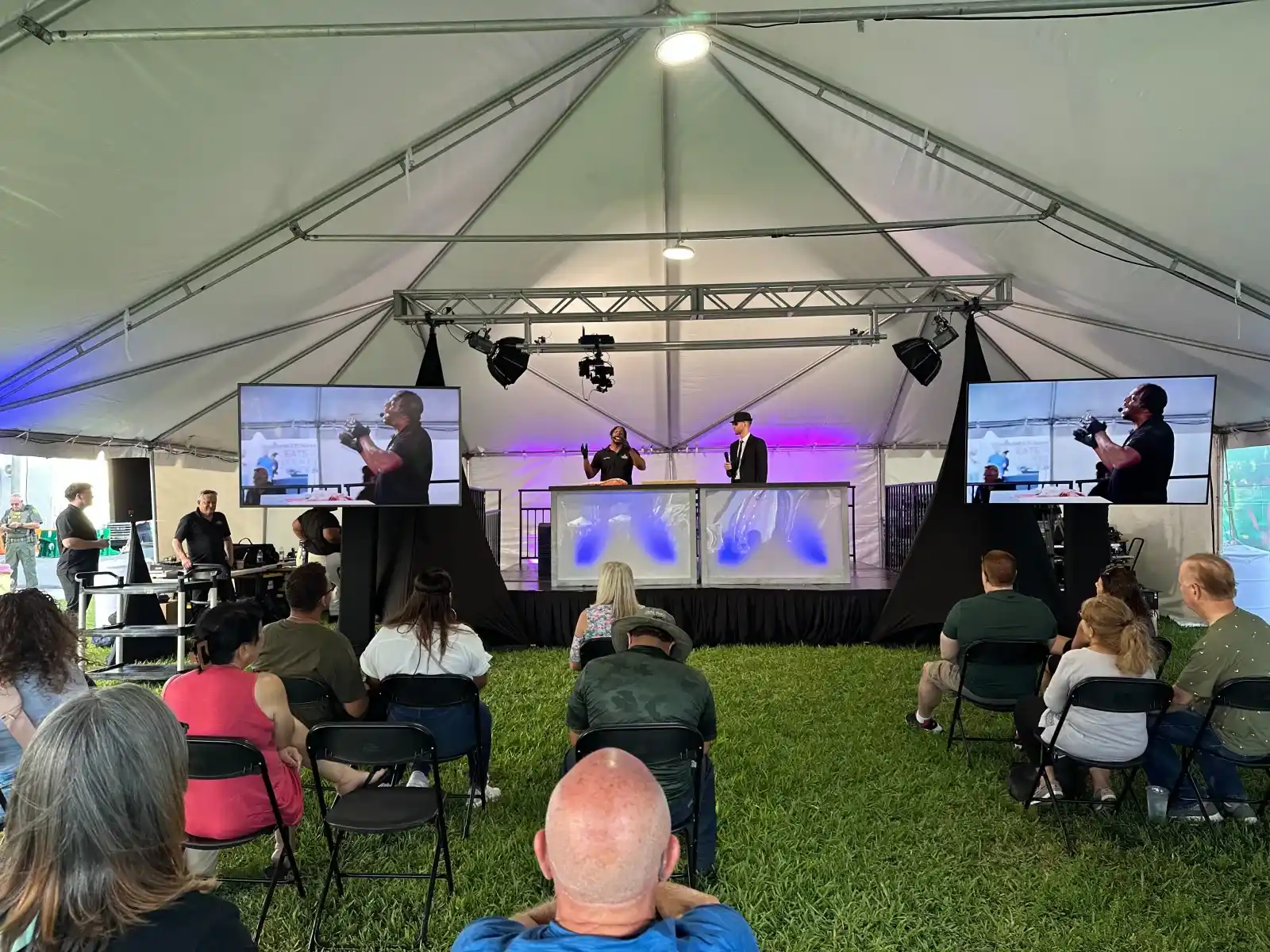
Two to three cameras cover most keynotes, panels, and award programs. One camera forces a choice in every moment, the speaker or the crowd, and the angle you skip is gone. A second camera gives the editor a clean cut when someone steps out of frame or crosses the lens. Add a roaming operator when the recap matters as much as the archive.
| Event type | Suggested coverage | Why |
|---|---|---|
| Internal panel or breakout | 1 to 2 cameras | Content matters more than atmosphere |
| Keynote or general session | 2 to 3 cameras | Wide safety shot plus tight speaker shot, edit chooses later |
| Gala, awards, or launch | 3 or more, including a roaming operator | Reactions, handoffs, and candids carry the recap |
| Hybrid or streamed event | Coverage planned for the stream first | The live program and the edit share one clean signal |
A typical multi-camera setup looks like this:
- A locked wide shot that holds the full stage as your safety net, always rolling and always usable.
- A tight camera on the speaker for the expressions and gestures that carry a line.
- A roaming camera for crowd reactions, candid details, and the texture that makes a room feel alive.
- Clean program audio pulled from the sound system rather than a camera mic, so the words are as sharp as the picture.
Why does audio decide whether people keep watching?
Viewers forgive a soft shot. They stop watching when they cannot hear the speaker. The cleanest event audio comes straight off the mixing board, because a camera microphone in a ballroom records the room echo, the HVAC, and the table next to it. Ask your video team how they will get a board feed, and who is responsible for it.
This is where many recordings fall apart: the AV company tunes the mix for the hall, and nobody tunes it for the recording. When the same team runs the room's audio and the cameras, the feed that reaches the edit is built for the deliverable. Full Moon Creative keeps event production, audio and visual, and video under one roof for exactly this reason.
What belongs on an event video shot list?
A shot list is the crew's checklist of moments that must be captured, mapped to the run of show. It protects the shots you cannot get back, so the recap does not depend on luck. Share it with the crew at least a few days ahead, with names and photos of the people who must appear on camera.
- Establishing shots: venue exterior, signage, registration, the room before doors open.
- Arrivals and networking: guests coming in, handshakes, conversations, the bar and lounge.
- Program moments: walk-ons, the best lines from each speaker, award handoffs, applause.
- People who must appear: executives, honorees, board members, sponsors.
- Sponsor obligations: every logo, booth, and activation you promised to show.
- Details: stage design, LED wall content, centerpieces, food, branded items.
- Soundbites: three to five short guest or speaker interviews for testimonial clips.
The shot list covers what you can predict. The footage people share is usually what you can't: the founder getting emotional, the standing ovation nobody expected. A crew that knows the run of show keeps rolling through the parts that look like dead air, because that is where the real reactions happen.
What is B-roll? B-roll is the supplementary footage an editor cuts around the main action: crowd reactions, venue details, candid moments, and establishing shots. It supplies the texture and cutaways that turn a flat recording into a story. The term comes from film editing, where footage was split between two alternating reels, an "A" roll and a "B" roll, so shots could be joined without visible splices (background on B-roll).
What should you settle with the video team before event day?
Settle five things in writing: the deliverables, the run of show, the camera positions, the venue rules, and the delivery date. Most event-day problems trace back to one of these left vague, such as a camera riser the venue never approved or a recap nobody knew was due the next morning.
- Deliverables and formats. Recap, full sessions, vertical cuts, and the delivery date for each.
- Run of show. Minute-by-minute, with the three or four moments that matter most marked.
- Camera positions. Where each camera lives without blocking guest sightlines or fire exits. A site walk settles this; a floor plan rarely does.
- Venue clearance. Most hotels and convention centers require a certificate of insurance (COI) naming the venue, plus load-in times and power access.
- Audio and streaming. Who supplies the board feed, and whether the event is also streamed live.
How does Full Moon Creative plan and shoot event video?
We start with a discovery call, quote every deliverable line by line, plan the shoot in pre-production, cover the event with the same senior crew that planned it, and deliver a cinema-quality master plus the cuts you need. You pay 50% to reserve the date and 50% on delivery, get two revision rounds, and own the final videos outright.
- Discovery call. Reach out and we respond within one business day to book it. We ask what the video is for and where it will run, then scope cameras and deliverables to match.
- Line-item quote. Deliverables, formats, and delivery dates are written into the quote. Video projects start around $2,500 for a single-camera shoot and edit.
- Pre-production. We build the shot list against your run of show and use storyboards and AI previsualization so you see the plan before the cameras roll. If your venue needs a COI, we issue one naming it, usually within one business day.
- Event day. The founder-led senior team that planned the shoot runs it, not a rotating list of freelancers. When the event is also streamed live, the stream and the recording share one clean signal, and you get the full recording and edited highlights afterward.
- Post-production. Editing, color grading, sound design, and motion graphics. You receive a cinema-quality master plus horizontal, vertical, and cutdown versions.
- Revisions and payment. Two revision rounds are included. Anything beyond the agreed scope is quoted before we do the work, so there is no surprise bill. The 50% balance is due on delivery, and larger multi-phase projects can be paid by milestone.
How do you get months of content from one event?
Shoot for the content calendar, not just the recap. One well-planned day can produce a hero recap, a full keynote archive, a dozen vertical clips, sponsor reels, testimonial clips, and B-roll for next year's promotion. That range has to be decided in planning, because an editor cannot cut a vertical clip or a testimonial nobody shot.
Since you own the finished videos with unlimited usage, they can run as organic posts, paid ads, or on your website for as long as they stay relevant. The same team can carry the footage into ongoing video production, so last year's event becomes the promotion for this year's.
Last updated