
South Florida Cities Deserve More Than a Camera on a Tripod
A single fixed camera in the back of the chamber technically records a meeting, but it does not actually serve the residents watching from home. Here is what real production value looks like for a South Florida city, and why it matters more than most agendas admit.
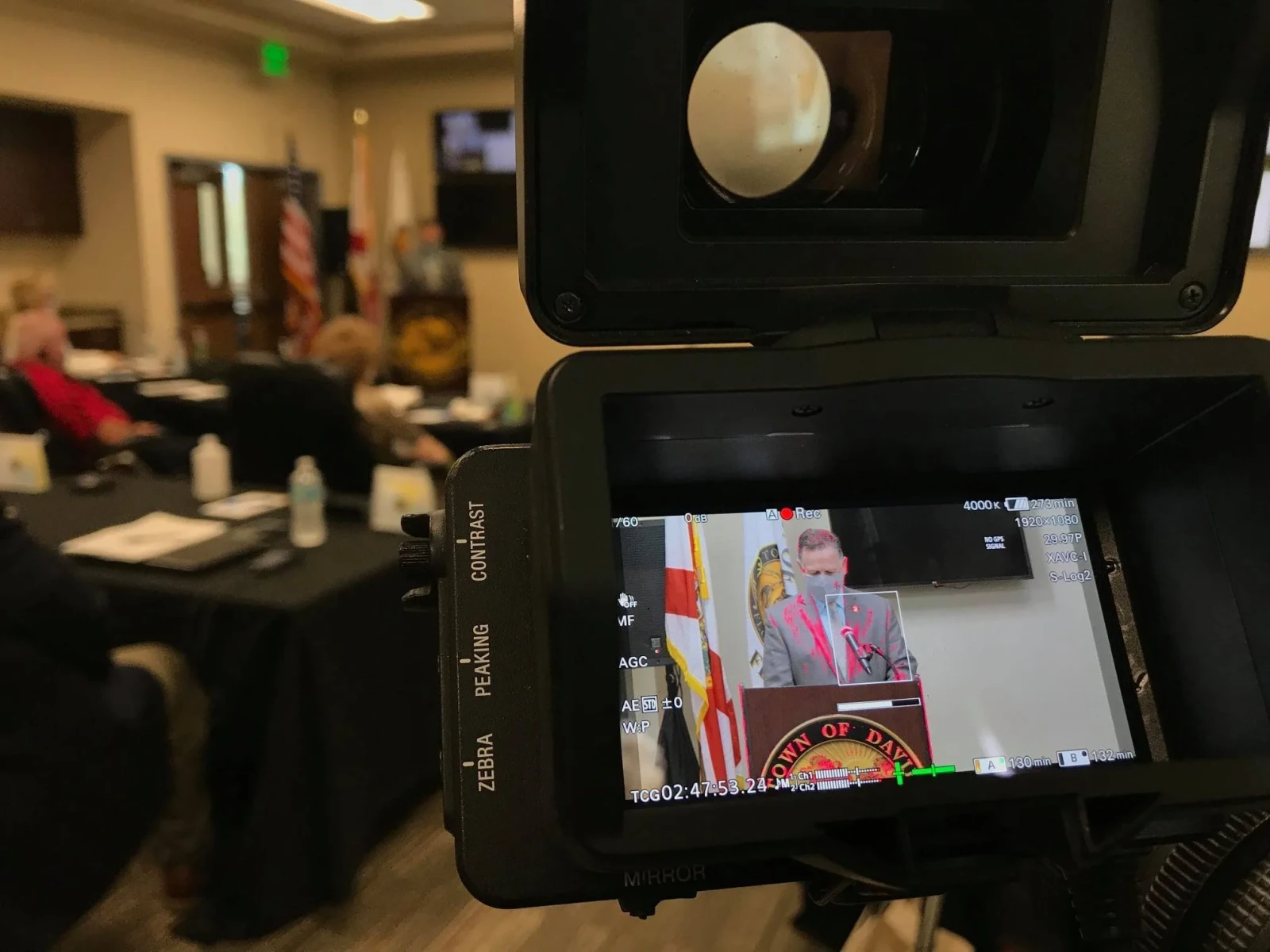 Cover Image
The most common broadcast setup in city chambers across Broward, Miami-Dade, and Palm Beach is still a single camera bolted to a tripod in the back of the room, pointed at the dais. It captures wide, it never moves, and the audio comes off one ceiling mic that flattens every voice into the same muddy hum. A resident at home trying to follow a vote on a drainage project or a zoning change that affects their street is left squinting at a distant blur, straining to hear who said what. Technically, the meeting was televised. Functionally, it was filed away.
That gap between recorded and watchable is where civic trust quietly erodes. A camera on a tripod isn't a broadcast. It's a compliance checkbox, and residents can feel the difference.
Recording a Meeting Is Not the Same as Reaching Residents
Public meetings exist so people who can't be in the room can still see how decisions get made. That only works if the production is built for the person at home, not just the record. When you can't tell which commissioner is speaking, can't read the slide on the screen, and can't hear a resident at the public comment podium, the broadcast has failed its one job. The vote happened, but the transparency didn't.
Reaching residents means treating the meeting like the public-facing event it is: switched camera angles that follow the speaker, audio mixed so every voice is clear, and on-screen context so viewers know what's being discussed and when. None of that is luxury. It's the baseline for a meeting a working parent in Pembroke Pines or a senior in Boca Raton can actually follow on a phone after dinner.
Accessibility Is a Civic Obligation, Not a Feature
For a meaningful share of your residents, a single muffled microphone isn't an inconvenience; it's a locked door. Older residents, residents with hearing loss, and residents who speak English as a second language all depend on a clear signal and readable on-screen information to participate in their own local government. A blurry wide shot and a hum of room noise effectively shut them out.
Professional government and municipal AV closes that gap by design. Clean, intelligible audio, legible captions and lower thirds, and a stable stream that holds up on a slow connection aren't extras you add at the end. They're the foundation of an accessible public meeting, the standard the Americans with Disabilities Act expects of public bodies, and they signal to every resident that the city built the broadcast for them rather than for the archive shelf.
Storytelling Turns a Meeting Into Engagement
Cities aren't just decision-making bodies. They're stories: a new park opening, a hurricane response that held, a small business district coming back to life. A static tripod can't tell any of that; it can only stare. When a city invests in real video production, the same equipment and crew that cover a commission meeting can also produce the content that makes residents proud to live there.
Engagement isn't something you demand from residents; it's something you earn by showing up in the formats they already watch. A well-produced recap of a council decision, a short explainer on a new ordinance, or a clean highlight of a community event travels further on social than any dense PDF agenda ever will.
What Real Production Value Actually Includes
Professional municipal broadcast doesn't mean an unaffordable television studio. Most of it is practical and invisible to viewers when it's done well. Real production value for a South Florida city typically includes:
- Multiple switched camera angles. The view follows the speaker, frames the dais cleanly, and cuts to the podium for public comment, so viewers always know who's talking.
- Properly mixed audio. Every microphone is balanced so a resident at home hears each voice clearly, not a single flattened hum off the ceiling.
- On-screen context. Lower thirds, agenda item labels, and captions tell viewers exactly what's being discussed and who's speaking.
- Reliable live streaming. A stable broadcast that holds up across phones, tablets, and slow connections, with a clean recording archived for later viewing.
- A purpose-built AV system. Installed gear in the chamber that staff can run without a degree in broadcast engineering.
Notice what's not on that list: complexity for its own sake. The goal is a system your own clerk or IT staff can operate confidently every week, not a fragile rig that needs a specialist on call.
A camera on a tripod records that a meeting happened. Real production value lets a resident actually watch it. For a public body, that distinction is the whole point of being public.
One Roof Keeps Municipal Projects Accountable
Civic AV often arrives in disconnected pieces: one vendor installs the chamber equipment, another handles the live stream, and a third gets called in when the city wants a video about a new project. When something fails on meeting night, each one points at the others, and city staff are left troubleshooting a broadcast in front of a live audience. Public bodies can't afford that kind of finger-pointing, because the failure plays out in public.
Put the chamber install, the live streaming, and the storytelling under one accountable team, and the crew that builds the system is the same crew that runs it and produces content with it. For a South Florida municipality with budgets under real public scrutiny, that's easier to defend, because one team's name is on the entire outcome.
What South Florida Residents Should Expect
The standard for civic broadcast has moved. Residents across Broward, Miami-Dade, and Palm Beach carry better cameras in their pockets than the one bolted to the back wall of many chambers, and they notice when their city's stream looks and sounds worse than a phone video. Meeting that expectation takes no spectacle, just basic respect for the people the meeting is supposed to serve.
With 21+ years producing video, live events, AV installs, and broadcasts across South Florida, Full Moon Creative builds municipal systems for the resident at home, not just the record. If your city is still running its meetings through a single camera on a tripod, the people on the other end of that stream deserve to see and hear their own government clearly. That's the difference between a meeting that was recorded and one that was truly held in public.
Last updated